





News
Mobile Energy Storage Charging and Discharging System: Hot Swap Technology for Efficient Energy Management
I. Core Functions and Technological Innovations
High-capacity Energy Storage and High-efficiency Charging and Discharging
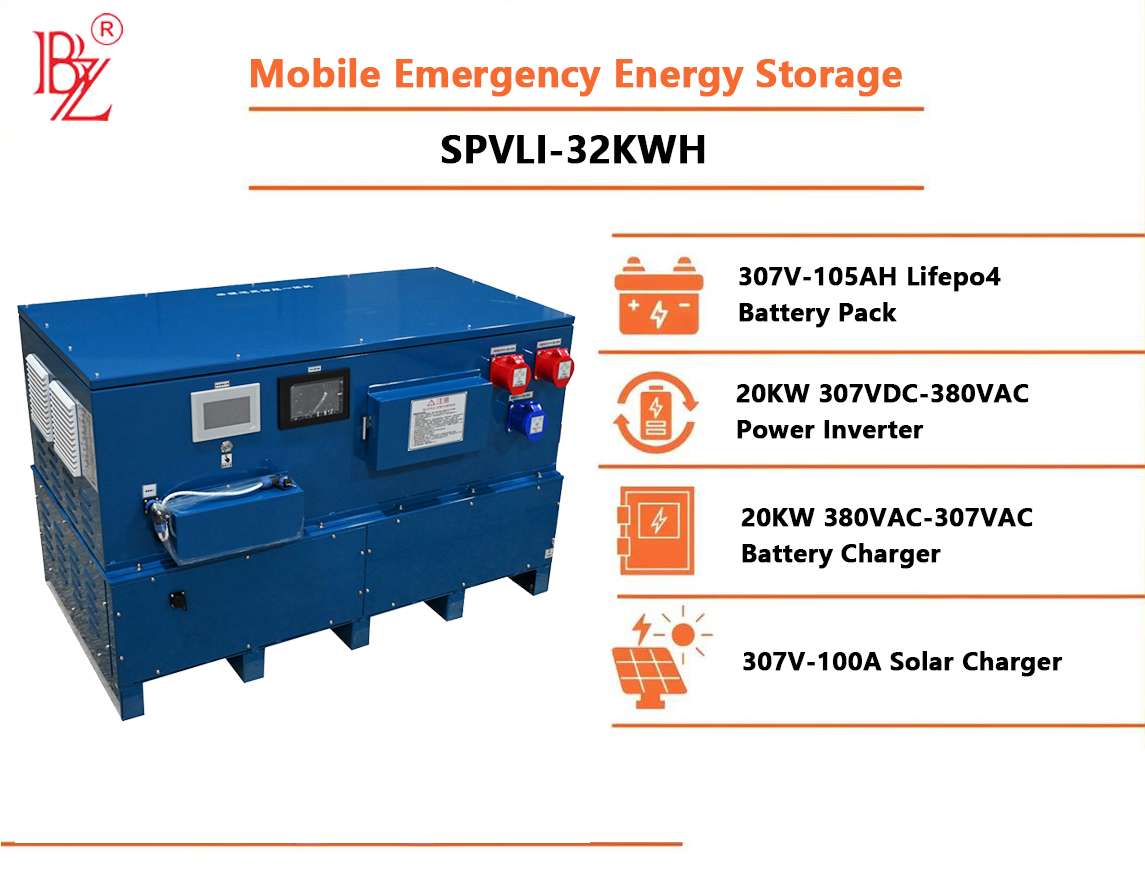
The system integrates a 32kWh high-performance lithium iron phosphate battery core, which supports 20kW three-phase (7kW single-phase) utility/generator charging and 3-25kW DC/AC three-phase inverter output, and can satisfy the demand for continuous power supply in outdoor scenarios without utility power. Its design life is over 10 years, and the consistency of the battery core is guaranteed by laser welding process to ensure long-term stable operation.
Hot-swappable modular design
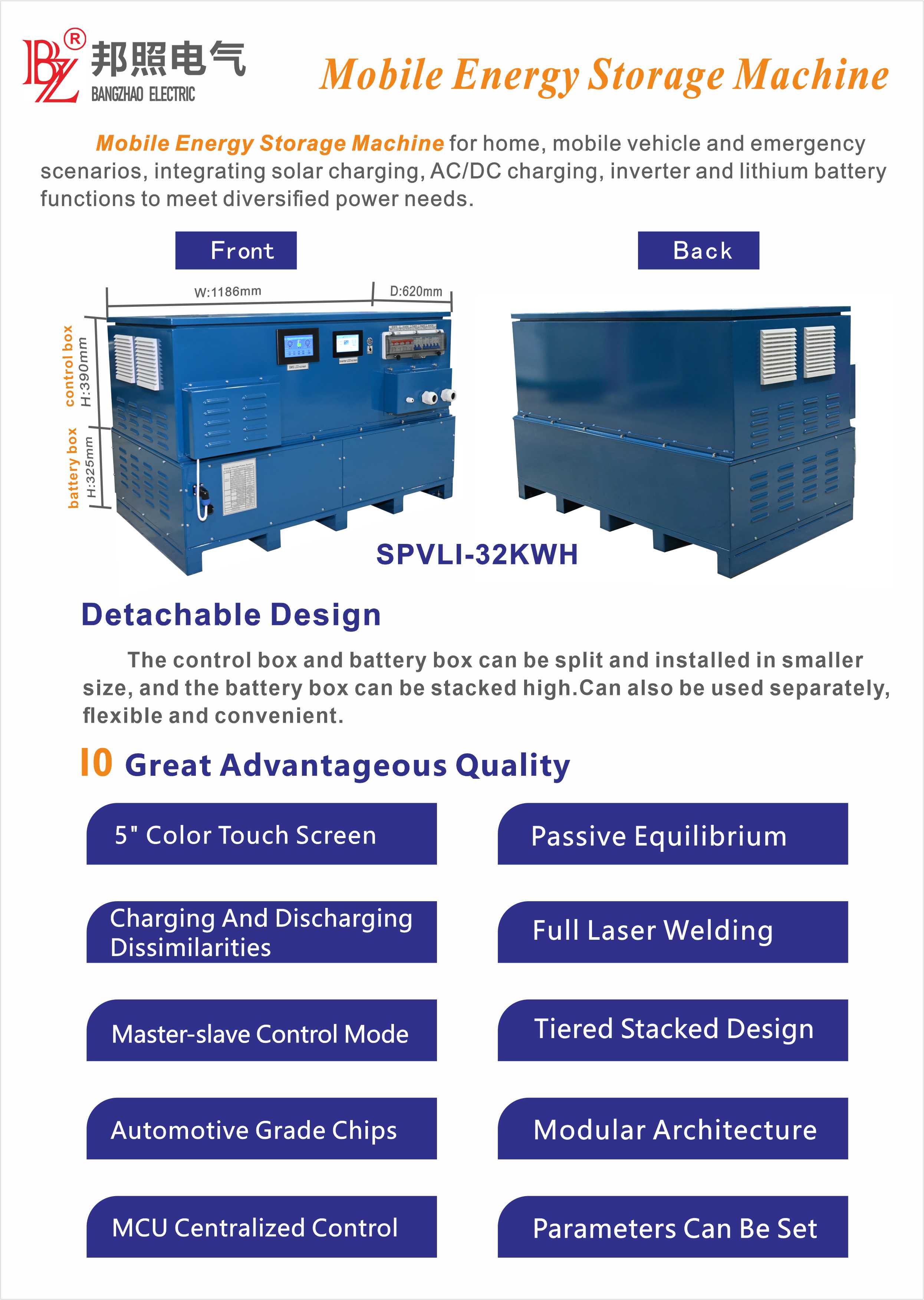
Technical Principle: Hot-swappable technology allows users to safely plug and unplug battery modules or expansion units without interrupting system operation. The input and output terminals are controlled by independent hard circuit breaker switches, combined with protective circuit design to avoid arc, surge current or latch-up effect caused by charged operation, and to ensure operational safety and equipment life.
Application Scenario: Supporting rapid capacity expansion on site, adapting to different power requirements; modular structure facilitates maintenance and reduces the risk of downtime, especially suitable for remote areas or emergency scenarios.
Intelligent Equalisation and System Stability
The master-slave control mode combined with passive equalisation technology can manage the temperature of the equalisation resistor and set the start-up voltage difference, reducing the impact of the ‘barrel effect’ on the efficiency of energy storage. The charging and discharging ports are independently controlled, and the system automatically switches the protection state when overcharging/discharging to ensure stability.
Technical Advantages and User Experience
Safety and Ease of Use
Protection level: IP45 waterproof and dustproof design, working temperature range -20℃ to 45℃, adaptable to harsh environments.
Convenience of operation: Input and output terminals are equipped with independent switches, so non-professional users can operate safely; real-time monitoring, simplifying the operation and maintenance process.
Efficient Energy Management
Load Balancing: Reduces power costs by storing power in the trough and releasing it in the peak, supporting energy self-sufficiency in scenarios such as home photovoltaic systems and commercial facilities.
Fast charging support: Provides multiple interfaces (e.g., PV charging, EV charging piles, or utility/generator) to meet diversified equipment needs
Economy and environmental friendliness
Long-life design: Capacity retention rate of over 80% after more than 3,000 cycles of charging and discharging to reduce whole-life cycle costs.
Green Energy Integration: Support solar PV panel charging, build micro-grid or off-grid system, reduce dependence on traditional power grid.
Typical application scenarios
Outdoor work and Emergency Power Supply
Provide 5 hours of continuous power supply for 6kWh equipment at construction sites, or as a backup power source for earthquake relief and mobile medical treatment.
Industrial-grade design (such as Thousand Ride Power industrial model) supports high-power loads to meet the demand for stable power in industrial projects.
Commercial and Transportation
EV Charging Infrastructure: As a mobile charging pile, it provides 40%-60% power for new energy vehicles to extend the range.
Commercial Load Management: Balance the peak load of the power grid, reduce the cost of electricity and improve the reliability of power supply.
Home and off-grid system
When a household consumes 2 kWh of electricity per day, the 32kWh capacity can support 15 days of self-sufficiency; combined with the PV system, it can achieve continuous power supply at night or on cloudy or rainy days.
Build independent energy networks in remote areas to increase energy self-sufficiency.